Emergency Flood Damage Cleanup in Boca Raton After a Toilet Supply Line Rupture
Rescue Clean 911 recently completed a three-day emergency flood damage restoration project for a homeowner in the Colonnade community of Boca Raton, Florida. The water damage began after a toilet supply line suddenly ruptured, releasing water into multiple areas of the home.
The homeowner contacted Rescue Clean 911 after hours for immediate assistance. Before the restoration team even arrived, technicians helped the homeowner locate and shut off the home’s main water valve. They also instructed the homeowner to place towels along the base of the kitchen cabinets to slow the spread of water and help protect the cabinetry.
Within 90 minutes of the initial call, Rescue Clean 911’s emergency response team was at the property documenting the loss, protecting personal belongings, extracting standing water, and beginning the structural drying process.
Boca Raton Flood Damage Project Overview
Service Provided: Emergency Flood Damage Cleanup and Water Mitigation
Location: Colonnade in Boca Raton, Florida
Property Type: Residential home
Cause of Damage: Ruptured toilet water supply line
Areas Affected: Multiple areas of the home
Emergency Response Time: Within 90 minutes
Project Timeline: Three days
Insurance Carrier: Progressive Insurance
Payment Method: Insurance claim
After-Hours Call for a Ruptured Toilet Supply Line
The homeowner contacted Rescue Clean 911 after discovering water spreading through the home from a failed toilet supply line.
Toilet supply lines are relatively small plumbing components, but they remain under pressure whenever the home’s water system is active. When a line ruptures or becomes disconnected, water can continue flowing until the fixture valve or the property’s main water supply is shut off.
Because the homeowner needed immediate guidance, Rescue Clean 911 began helping over the phone while the emergency crew was traveling to the property.
Helping the Homeowner Before the Team Arrived
The first priority was stopping the active water source.
Rescue Clean 911’s technicians guided the homeowner through locating the home’s main water shut-off valve and turning off the water. Stopping the flow helped prevent additional water from entering the property while the restoration team was on the way.
The homeowner was also instructed to place towels along the base of the kitchen cabinets. This temporary step helped absorb and redirect some of the surface water before it could continue moving underneath the cabinetry.
Phone guidance cannot replace professional extraction and structural drying, but giving the homeowner clear instructions during the first few minutes helped reduce the amount of additional damage occurring before the crew arrived.
Emergency Response Within 90 Minutes
Rescue Clean 911 arrived at the Boca Raton home within 90 minutes of receiving the emergency call.
A fast response was especially important because water had already spread into multiple areas of the property. The longer water remains inside a home, the farther it may travel beneath flooring, behind baseboards, underneath cabinets, or into other porous building materials.
Upon arrival, the team immediately evaluated the affected areas and began developing a mitigation plan based on the visible water, moisture readings, and materials involved.
Documenting the Water Damage for Progressive
Before beginning major mitigation work, Rescue Clean 911 documented the condition of the property for the homeowner’s insurance claim with Progressive.
The documentation process created a record of the loss and the conditions present when the restoration team arrived. This may include photographs, moisture readings, affected materials, equipment placement, extraction activities, and other details related to the emergency response.
Thorough documentation helps provide the homeowner and insurance representatives with a clearer understanding of:
- Where the water originated
- Which areas were affected
- What materials were exposed to moisture
- Why emergency services were necessary
- What extraction and drying equipment was used
- How the structure responded during drying
- What steps were taken to prevent additional damage
Rescue Clean 911 continued documenting the project as mitigation and drying progressed.
Protecting Furniture and Personal Belongings
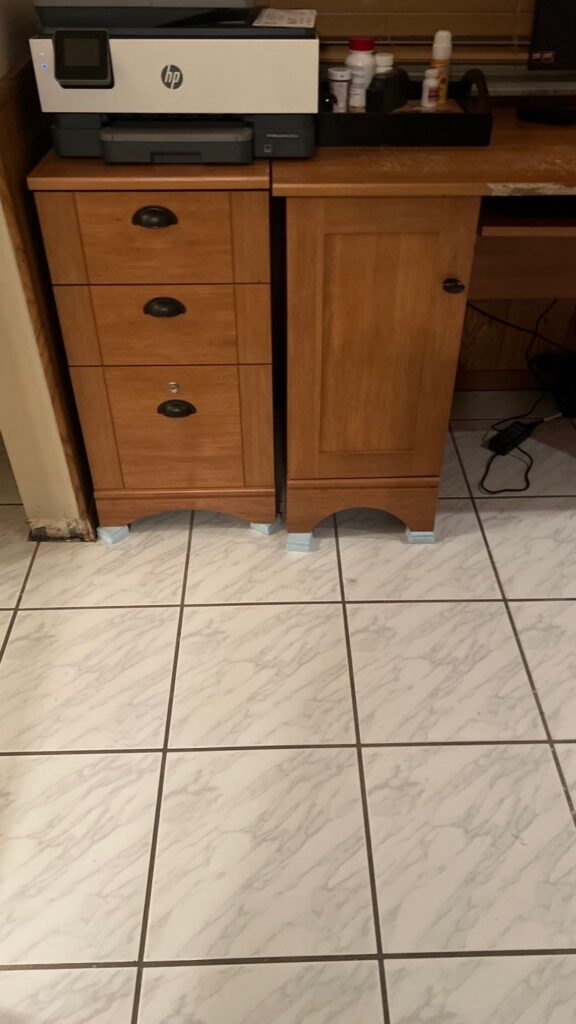
Before water extraction and equipment placement began, technicians protected furniture and valuable personal belongings located near the affected areas.
Items were moved, elevated, or covered when necessary to reduce additional exposure to water and restoration equipment. Protecting contents early in the process also gave the team better access to wet flooring and building materials.
This step helped prevent belongings that had not yet been damaged from remaining in contact with wet surfaces or interfering with the structural drying process.
Extracting Standing Water From the Home
Once the property had been evaluated and personal belongings were protected, Rescue Clean 911 began extracting the standing water.
Professional extraction equipment removes significantly more water than towels, household vacuums, or mops can manage. Removing surface water quickly also shortens the amount of time commercial drying equipment must operate to address moisture remaining within building materials.
The team worked through the affected areas to remove accessible standing water and reduce the amount of moisture continuing to spread across the property.
Water extraction was only the first stage of the mitigation process. Materials that appeared dry at the surface still needed to be evaluated for moisture underneath or behind them.
Inspecting for Hidden Moisture
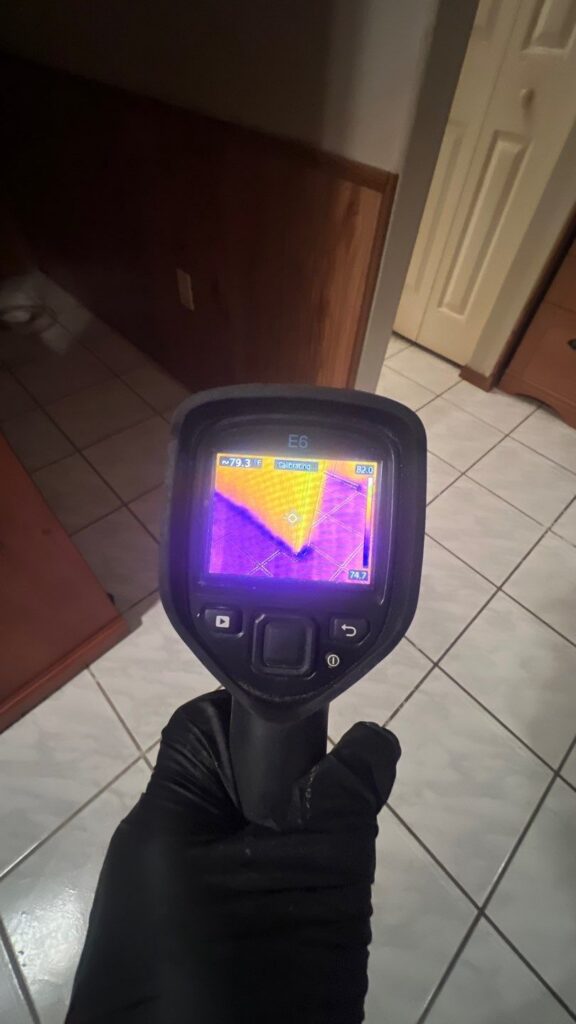
After the visible water was removed, Rescue Clean 911 inspected the surrounding building materials for hidden moisture.
Water from a ruptured supply line can travel beyond the areas where puddles are visible. Moisture may become trapped:
- Underneath flooring
- Behind baseboards
- Inside drywall
- Beneath cabinets
- Along wall plates
- Inside adjoining rooms
- Around plumbing penetrations
- Within other absorbent materials
Professional moisture-detection equipment allowed the team to identify areas that required continued drying, even when the surfaces no longer appeared wet.
Finding these areas was important for developing an effective drying plan and reducing the likelihood that moisture would remain concealed after the project was considered complete.
Strategic Placement of Commercial Drying Equipment
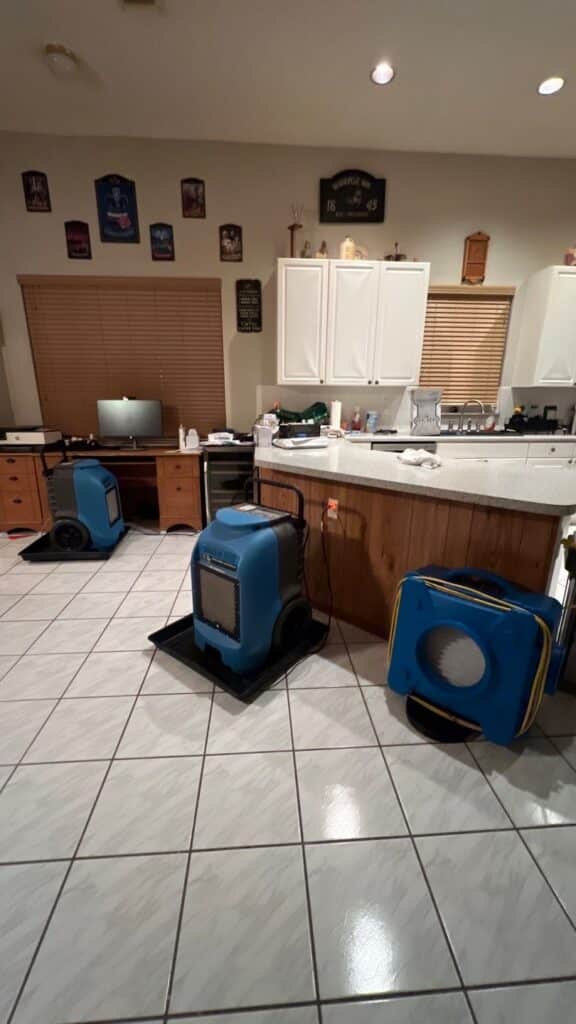
Following extraction and moisture evaluation, Rescue Clean 911 strategically placed commercial drying equipment throughout the affected portions of the home.
The equipment was positioned based on the location and extent of the water intrusion rather than simply placing fans randomly around the property.
The drying system was designed to:
- Promote evaporation from wet materials
- Move dry air across affected surfaces
- Reduce moisture remaining inside the structure
- Control indoor humidity
- Limit moisture migration into additional areas
- Help prevent secondary damage
- Support efficient drying of salvageable materials
Equipment placement was adjusted to create consistent airflow across the affected areas while avoiding unnecessary disruption to the remainder of the home.
Applied Structural Drying Procedures
Rescue Clean 911’s technicians are IICRC-certified in Applied Structural Drying, commonly referred to as ASD.
Applied Structural Drying focuses on using professional extraction, airflow, dehumidification, moisture measurement, and equipment monitoring to dry affected building materials efficiently.
The goal is not simply to make the property feel dry. The team must determine whether moisture levels within the affected materials are returning to appropriate drying goals.
Throughout the three-day project, Rescue Clean 911 monitored conditions and evaluated how the home’s materials responded to the drying equipment.
Reducing the Risk of Secondary Damage
Responding quickly helped reduce the likelihood of additional problems developing after the original toilet supply line rupture.
When water remains inside building materials, it can contribute to:
- Swelling or deterioration of cabinets
- Warped flooring
- Damaged baseboards
- Softened drywall
- Staining and finish damage
- Elevated indoor humidity
- Persistent odors
- Hidden moisture inside wall cavities
- Conditions favorable to mold growth
By shutting off the water, extracting standing water, identifying hidden moisture, and beginning structural drying quickly, Rescue Clean 911 was able to limit the amount of time the home remained wet.
This helped reduce unnecessary demolition and additional repair costs for the homeowner.
Completing the Drying Process in Three Days
The emergency mitigation and structural drying process was completed over three days.
During that period, Rescue Clean 911:
- Helped the homeowner stop the active water source
- Provided damage-reduction instructions by phone
- Arrived at the property within 90 minutes
- Inspected the affected areas
- Documented the loss for Progressive
- Protected furniture and personal belongings
- Extracted standing water
- Checked surrounding materials for hidden moisture
- Installed commercial drying equipment
- Controlled indoor moisture and humidity
- Monitored drying progress
- Verified that the affected materials reached the project’s drying goals
The coordinated response allowed the homeowner to move forward from the unexpected flood with the affected areas professionally dried and the mitigation work properly documented.
Why Fast Water Mitigation Matters
The first actions taken after a plumbing failure can have a major effect on the overall extent of the damage.
Turning off the water limits the amount entering the property. Extraction removes water that has already accumulated. Structural drying then addresses moisture remaining inside materials that cannot be dried with towels or surface cleaning alone.
Waiting too long to begin these steps may allow the water to spread farther and increase the likelihood of damaged flooring, cabinets, drywall, insulation, or personal belongings.
Rescue Clean 911’s availability after hours allowed the homeowner to begin addressing the emergency immediately instead of leaving the property wet until the following business day.
What to Do After a Toilet Supply Line Breaks
Homeowners experiencing a similar plumbing emergency should take several immediate steps when it is safe to do so:
- Shut off the water valve behind the toilet.
- If the fixture valve does not work, shut off the home’s main water supply.
- Avoid entering areas where water may have contacted electrical equipment.
- Move small valuables away from the affected area.
- Do not use an ordinary household vacuum to remove standing water.
- Contact a professional water damage restoration company.
- Take photographs when doing so will not delay emergency action.
- Notify the insurance carrier after the property is stabilized.
Rescue Clean 911 can also provide instructions over the phone while an emergency response team is being dispatched.
Insurance Claim Assistance After Water Damage
Water damage insurance claims often require detailed information about the source of the loss, the areas affected, and the work required to prevent further damage.
Rescue Clean 911 understands the importance of documenting emergency mitigation from the beginning of the project. The company provides records related to water extraction, affected materials, moisture conditions, drying equipment, and completed restoration services.
Insurance coverage varies by policy, and the insurance carrier determines what is covered. However, clear documentation can help create a more organized process for the homeowner and the assigned insurance representative.
Emergency Flood Damage Restoration in Boca Raton
Rescue Clean 911 provides 24/7 emergency water damage restoration for homeowners, businesses, property managers, and commercial property owners throughout Boca Raton.
The team responds to water damage caused by:
- Ruptured toilet supply lines
- Burst or leaking pipes
- Refrigerator supply line failures
- Washing machine overflows
- Water heater leaks
- Dishwasher leaks
- Air-conditioning drain backups
- Plumbing fixture overflows
- Roof leaks
- Stormwater intrusion
- Sewage backups
- Other unexpected flooding
Rescue Clean 911 uses professional water extraction, moisture-detection, dehumidification, and structural drying equipment to address both visible water and moisture hidden within the property.
When a pipe, plumbing fixture, or appliance suddenly floods your home, contact Rescue Clean 911 for immediate assistance, professional mitigation, and support throughout the insurance restoration process.
Other Recent Projects
-
HVAC Mold Sanitization in Delray Beach for Three A/C Systems
HVAC Mold Sanitization in Delray Beach for Three A/C Systems Rescue Clean 911 recently completed a two-day HVAC mold sanitization project for a homeowner in the Seven Bridges community of Delray Beach, Florida. Visible microbial growth had developed inside all three air-conditioning systems serving the home, creating concerns about musty odors, indoor air quality, and…
-
Mold Remediation in Boynton Beach After a Roof Leak
Mold Remediation in Boynton Beach After a Roof Leak Rescue Clean 911 recently completed a seven-day mold remediation project for a homeowner in the Valencia Reserve community of Boynton Beach, Florida. The project began after a roof leak allowed moisture to enter the home and affect the surrounding building materials. As moisture remained inside the…
-
Mold Remediation in Wellington After a Refrigerator Supply Line Leak
Mold Remediation in Wellington After a Refrigerator Supply Line Leak Rescue Clean 911 recently completed a seven-day mold remediation project for a homeowner in the Black Diamond community of Wellington, Florida. The damage began when a refrigerator water supply line failed, allowing water to spread from the kitchen into other areas of the home. Although…
-
Airbnb HVAC Duct Cleaning in Wellington After Mold and Musty Odors
Airbnb HVAC Duct Cleaning in Wellington After Mold and Musty Odors Rescue Clean 911 recently completed a one-day HVAC duct cleaning and mold remediation project at an Airbnb property in The Isles community of Wellington, Florida. The property owner had been dealing with persistent musty odors and visible mold contamination inside the air-conditioning system. Because…
-
HVAC Duct Cleaning in Wellington After Mold Was Found in the Air System
HVAC Duct Cleaning in Wellington After Mold Was Found in the Air System Rescue Clean 911 recently completed a scheduled HVAC duct cleaning project for a homeowner in the Grand Isles community of Wellington, Florida. The homeowner had concerns about poor indoor air quality, ongoing respiratory irritation, and contaminants potentially circulating through the home’s air-conditioning…
-
Mold Remediation in Boca Raton After an Upstairs Water Heater Leak
Mold Remediation in Boca Raton After an Upstairs Water Heater Leak Rescue Clean 911 recently completed a planned mold remediation project at a residential property on SE Mizner Boulevard in Boca Raton. The mold growth developed after a ruptured water heater in an upstairs apartment released water into the unit below. The water intrusion affected…