HVAC Mold Sanitization in Delray Beach for Three A/C Systems
Rescue Clean 911 recently completed a two-day HVAC mold sanitization project for a homeowner in the Seven Bridges community of Delray Beach, Florida. Visible microbial growth had developed inside all three air-conditioning systems serving the home, creating concerns about musty odors, indoor air quality, and contaminants circulating through the property.
During the evaluation, the Rescue Clean 911 team found that dirty evaporator coils were affecting the systems’ ability to regulate temperature and indoor relative humidity. The combination of moisture, dust, and buildup inside the equipment had created conditions where microbial contamination could develop.
Technicians cleaned and sanitized all three HVAC systems, removed visible contamination, replaced affected insulation inside each air handler, and installed new MERV 10 filters. The complete project was finished in two days.
Delray Beach HVAC Sanitization Project Overview
Service Provided: HVAC Mold Cleaning and Sanitization
Location: Seven Bridges in Delray Beach, Florida
Property Type: Residential home
HVAC Systems Serviced: Three
Primary Concern: Visible microbial growth and poor indoor air quality
Contributing Condition: Dirty evaporator coils and excess humidity
Materials Replaced: Contaminated air-handler insulation
Filter Upgrade: New MERV 10 air filters
Project Timeline: Two days
Payment Method: Out of pocket
Microbial Growth Found Inside Three HVAC Systems
The homeowner contacted Rescue Clean 911 after concerns developed about the condition of the home’s air-conditioning equipment and the quality of the air moving through the property.
The residence was equipped with three separate HVAC systems. During the inspection, visible microbial contamination was identified inside the equipment, requiring a detailed cleaning and sanitization process for each system.
When contamination develops inside an air handler, it can affect components that are directly involved in circulating air throughout the home. Addressing only the visible registers or replacing the filters would not have resolved the buildup inside the equipment itself.
Rescue Clean 911 developed a system-by-system cleaning plan so all three units could be properly serviced during the two-day project.
Dirty Evaporator Coils Contributed to the Problem
The evaporator coil is responsible for removing heat and moisture from the air as it passes through the HVAC system. When the coil becomes coated with dust, dirt, or other buildup, airflow and heat transfer may be reduced.
A dirty coil can make it more difficult for the system to maintain comfortable temperatures and properly control indoor humidity. The equipment may run longer while still struggling to remove enough moisture from the air.
In this Delray Beach home, dirty evaporator coils were identified as a contributing factor to the elevated moisture conditions inside the HVAC systems.
Moisture combined with dust and organic buildup can create favorable conditions for microbial growth on internal components and nearby insulation.
Protecting the Home Before Cleaning Began
Before opening and cleaning the HVAC equipment, Rescue Clean 911 prepared the surrounding work areas to help protect the homeowner’s property.
Technicians organized the project around the three separate air-conditioning systems and took steps to control dust, loosened debris, and contaminants during the cleaning process.
Each system was addressed individually so the team could carefully clean the affected components, remove damaged materials, and prevent debris from being unnecessarily spread through the home.
Cleaning and Sanitizing All Three HVAC Systems
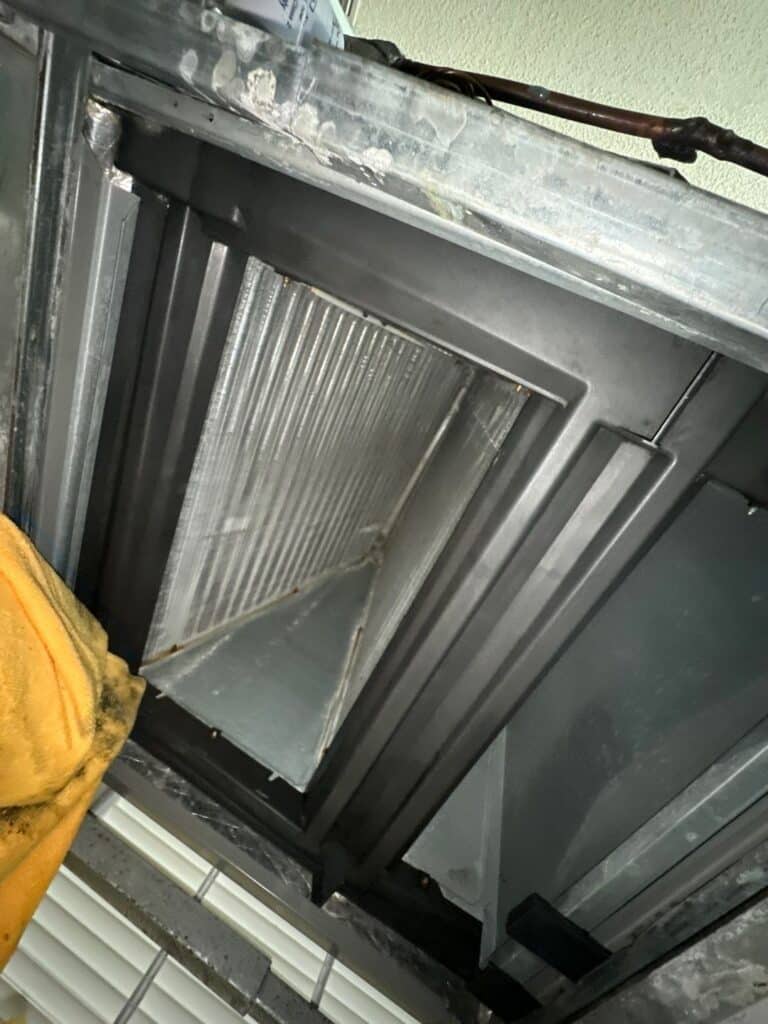
Rescue Clean 911 thoroughly cleaned and sanitized the accessible affected components of all three HVAC systems.
The cleaning process focused on removing visible microbial buildup, accumulated dust, and contaminants from the equipment rather than attempting to cover the problem with fragrances or surface sprays.
Addressing the internal system components was important because contaminants inside the air handler may be exposed to the airflow that serves the property.
The cleaning and sanitization process helped restore a cleaner interior environment within each HVAC unit and prepared the systems for the replacement of contaminated insulation and upgraded filters.
Removing Contaminated Air-Handler Insulation
Internal insulation inside an air handler helps control temperature, condensation, vibration, and sound. However, once porous insulation becomes contaminated, it may not always be suitable for surface cleaning alone.
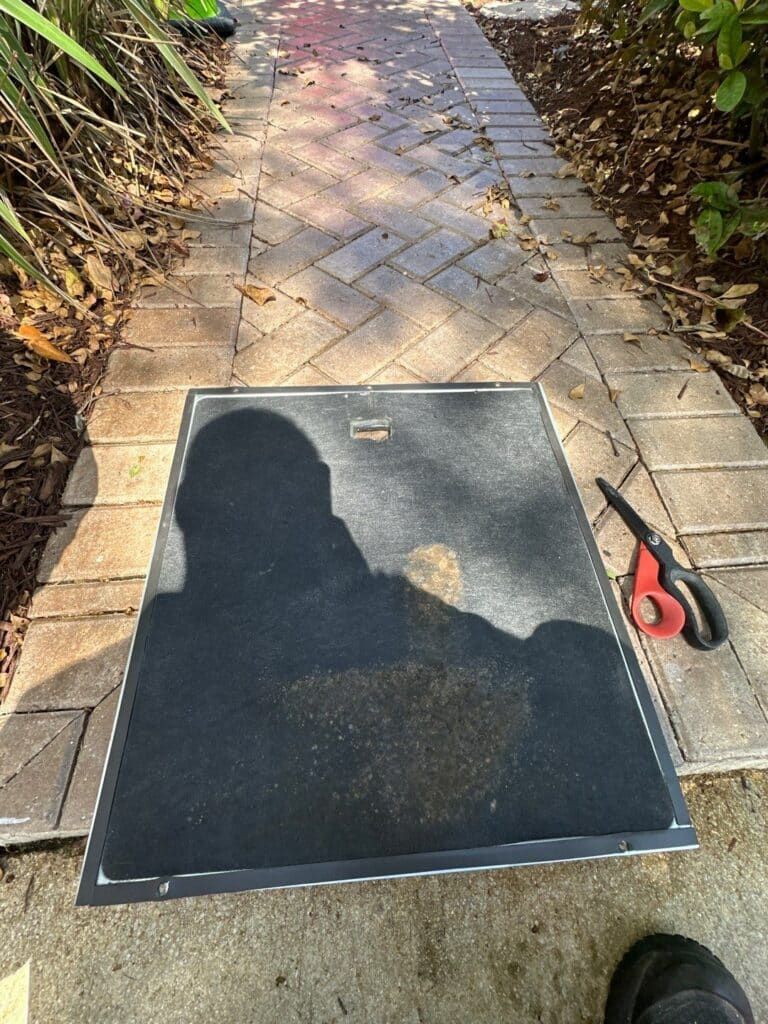
During this project, Rescue Clean 911 removed the affected insulation from all three air handlers.
Removing the contaminated material helped eliminate areas where microbial particles and odors could remain trapped after the surrounding equipment was cleaned. It also allowed technicians to inspect and clean the surfaces underneath the insulation before installing suitable replacement material.
Replacing the contaminated insulation was an important part of completing a more comprehensive HVAC sanitization rather than limiting the work to visible metal components.
Installing New Air-Handler Insulation
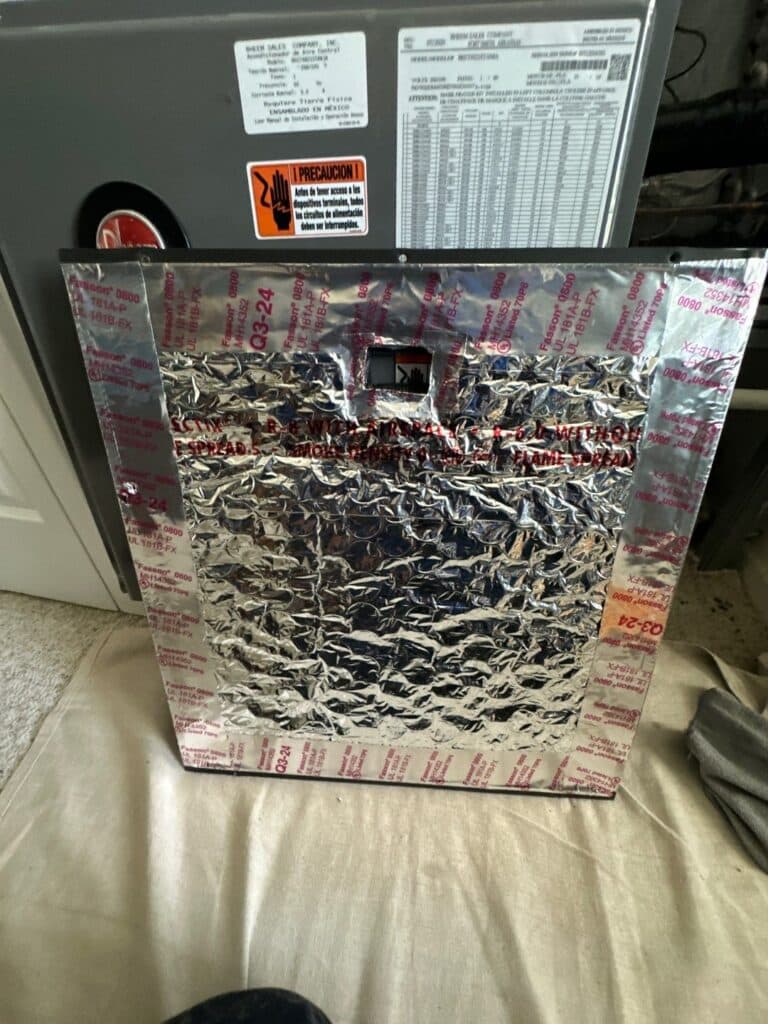
After the equipment was cleaned and sanitized, new insulation was installed inside each air handler where the contaminated material had been removed.
The replacement helped restore the air handlers while eliminating the affected porous material from the systems.
This step was coordinated with the cleaning of the coils and other accessible components so the newly installed insulation was placed into a cleaner HVAC environment.
Upgrading the Home to MERV 10 Filters
Rescue Clean 911 installed new MERV 10 filters as part of the completed project.
MERV stands for Minimum Efficiency Reporting Value and is used to describe how effectively an HVAC filter captures particles within certain size ranges. MERV 10 filters provide improved filtration compared with many basic residential fiberglass filters while remaining appropriate for numerous residential HVAC applications.
The upgraded filters were selected to help capture airborne particles such as:
- Household dust
- Pollen
- Larger allergen particles
- Pet dander
- Textile fibers
- Dust from normal household activity
- Other particles traveling through the return-air system
Filter selection must be compatible with the HVAC equipment because overly restrictive filtration can reduce airflow. Rescue Clean 911 considered the systems being serviced before installing the new filters.
Addressing Humidity to Help Reduce Recurring Growth
Cleaning visible contamination is only part of addressing an HVAC microbial-growth problem. The conditions that allowed the growth to develop must also be considered.
For this property, dirty coils had reduced the systems’ ability to operate as efficiently as intended and control indoor moisture. Cleaning the affected equipment helped improve heat transfer and supported better temperature and humidity regulation.
Ongoing humidity control is especially important in South Florida, where warm outdoor air contains significant moisture throughout much of the year.
Helpful steps for reducing excess indoor humidity may include:
- Keeping evaporator coils clean
- Replacing filters on an appropriate schedule
- Maintaining clear condensate drain lines
- Keeping exterior doors and windows closed while the A/C operates
- Monitoring indoor relative humidity
- Correcting duct leaks
- Scheduling regular HVAC maintenance
- Inspecting air handlers for condensation or microbial buildup
- Using supplemental dehumidification when appropriate
No HVAC cleaning can guarantee that microbial growth will never return, but correcting contributing moisture conditions can significantly reduce the likelihood of recurrence.
Helping Prevent Contaminants From Circulating
When visible microbial growth is present inside an HVAC system, normal operation may move particles or odors through the home’s air-distribution system.
Cleaning the air handlers and replacing contaminated insulation helped address potential sources of contamination before air continued circulating through the property.
The upgraded filters also provided an additional level of particle capture during normal HVAC operation.
Together, these steps created a more complete approach than replacing filters alone:
- Three HVAC systems professionally cleaned
- Visible microbial contamination removed
- Dirty evaporator coils addressed
- Internal components sanitized
- Contaminated insulation removed
- New air-handler insulation installed
- MERV 10 filters added
- Humidity-related conditions evaluated
Completed Over Two Days
Because the home contained three separate HVAC systems, Rescue Clean 911 completed the work over a coordinated two-day period.
The project included:
- Inspecting all three air-conditioning systems
- Identifying visible microbial growth
- Evaluating the evaporator coils
- Cleaning and sanitizing accessible affected components
- Removing contaminated internal insulation
- Cleaning the surfaces beneath the removed insulation
- Installing new air-handler insulation
- Installing new MERV 10 filters
- Reviewing the conditions contributing to excess humidity
- Returning the HVAC systems to normal operation
The two-day schedule gave the technicians enough time to address each system carefully without limiting the work to a basic vent or filter cleaning.
Homeowner Reported a Noticeable Improvement
After the project was completed, the homeowner reported being extremely pleased with the results and shared that breathing inside the home felt easier.
Individual experiences can vary, and HVAC sanitization is not a medical treatment. However, removing visible contamination, accumulated debris, affected insulation, and other potential irritants from an HVAC system can be an important part of improving the overall cleanliness of the home’s air-distribution equipment.
The homeowner’s feedback reflected the noticeable difference experienced after all three systems had been cleaned and restored.
Why HVAC and Mold Licensing Matter
Microbial contamination inside an air-conditioning system involves more than ordinary household cleaning. The company performing the service should understand HVAC equipment, airflow, moisture control, contamination removal, and appropriate cleaning procedures.
Rescue Clean 911 is:
- A licensed Florida HVAC contractor
- A licensed Florida mold remediation contractor
- A NADCA-certified air duct cleaning company
- An IICRC-certified restoration company
This combination allows the team to approach HVAC contamination from both the mechanical and mold-remediation sides of the project.
Rather than cleaning vent covers without evaluating the equipment, Rescue Clean 911 can inspect the system, identify moisture-related conditions, clean affected components, replace contaminated materials, and recommend appropriate filtration or HVAC improvements.
Signs an HVAC System May Need Professional Attention
Homeowners may benefit from an HVAC inspection when they notice:
- Musty odors when the air conditioner turns on
- Visible growth inside an air handler
- Dark buildup near coils or insulation
- Excessive indoor humidity
- Condensation inside the HVAC closet
- Repeatedly clogged drain lines
- Weak or inconsistent airflow
- Unusually long cooling cycles
- Dust or debris near supply registers
- Odors that return after routine cleaning
- Contaminated or deteriorating air-handler insulation
- Visible buildup on evaporator coils
These signs do not always confirm mold, but they may indicate that the HVAC equipment needs professional evaluation, maintenance, or cleaning.
HVAC Mold Sanitization in Delray Beach
Rescue Clean 911 provides professional HVAC mold cleaning, air-handler sanitization, duct cleaning, contaminated insulation replacement, and indoor air quality services throughout Delray Beach and the surrounding Palm Beach County area.
The company’s combined HVAC, mold-remediation, and NADCA certifications allow its technicians to address contamination inside residential air-conditioning systems using a comprehensive approach.
Homeowners experiencing musty odors, visible HVAC growth, dirty coils, excessive humidity, contaminated air-handler insulation, or poor system performance can contact Rescue Clean 911 to schedule a professional inspection.
Other Recent Projects
-
Mold Remediation in Boynton Beach After a Roof Leak
Mold Remediation in Boynton Beach After a Roof Leak Rescue Clean 911 recently completed a seven-day mold remediation project for a homeowner in the Valencia Reserve community of Boynton Beach, Florida. The project began after a roof leak allowed moisture to enter the home and affect the surrounding building materials. As moisture remained inside the…
-
Mold Remediation in Wellington After a Refrigerator Supply Line Leak
Mold Remediation in Wellington After a Refrigerator Supply Line Leak Rescue Clean 911 recently completed a seven-day mold remediation project for a homeowner in the Black Diamond community of Wellington, Florida. The damage began when a refrigerator water supply line failed, allowing water to spread from the kitchen into other areas of the home. Although…
-
Airbnb HVAC Duct Cleaning in Wellington After Mold and Musty Odors
Airbnb HVAC Duct Cleaning in Wellington After Mold and Musty Odors Rescue Clean 911 recently completed a one-day HVAC duct cleaning and mold remediation project at an Airbnb property in The Isles community of Wellington, Florida. The property owner had been dealing with persistent musty odors and visible mold contamination inside the air-conditioning system. Because…
-
HVAC Duct Cleaning in Wellington After Mold Was Found in the Air System
HVAC Duct Cleaning in Wellington After Mold Was Found in the Air System Rescue Clean 911 recently completed a scheduled HVAC duct cleaning project for a homeowner in the Grand Isles community of Wellington, Florida. The homeowner had concerns about poor indoor air quality, ongoing respiratory irritation, and contaminants potentially circulating through the home’s air-conditioning…
-
Mold Remediation in Boca Raton After an Upstairs Water Heater Leak
Mold Remediation in Boca Raton After an Upstairs Water Heater Leak Rescue Clean 911 recently completed a planned mold remediation project at a residential property on SE Mizner Boulevard in Boca Raton. The mold growth developed after a ruptured water heater in an upstairs apartment released water into the unit below. The water intrusion affected…
-
Commercial Fire Damage Restoration in Boca Raton After Refrigerator Fire
Commercial Fire Damage Restoration in Boca Raton After Refrigerator Fire Rescue Clean 911 recently completed a commercial fire and water damage restoration project in Boca Raton after an electrical malfunction inside a mini refrigerator caused a fire. The fire activated the building’s sprinkler system, releasing thousands of gallons of water before firefighters were able to…