
What to Do After a Burst Pipe: First Steps Before Water Damage Cleanup Begins
When a pipe bursts, focus on three things first: stop the flow of water, keep people away from immediate hazards and arrange the right help. You do not need to solve the entire cleanup in the first few minutes. You do need to prevent more water from entering the property and avoid making the damage harder to assess.
A plumber will usually be needed to repair the failed pipe. Water damage cleanup is a separate part of the response, dealing with the water already released and the materials it reached.
Stop the Water and Check the Area Before Going in
Use the shutoff valve for the affected fixture if you can reach it easily. If that does not stop the leak, close the property's main water shutoff. A valve that is inaccessible, stuck or ineffective is a reason to call a plumber rather than spending more time fighting it.
Do not walk into standing water when outlets, cords, appliances or electrical equipment may have been affected. Stay out of rooms with a sagging ceiling, unstable materials or water that could contain sewage or other contaminants. Keep children and pets away from the affected area as well.
Once the source is under control and the room is safe to approach, these are the most useful immediate actions:
- Move small valuables, documents and portable electronics away from the water.
- Take wide and close photographs before changing the affected area.
- Use towels or a mop for a small amount of accessible surface water.
- Save damaged parts removed during an emergency plumbing repair when practical.
- Write down when the leak was discovered and which rooms were affected.
Do not use a standard household vacuum to collect water. Avoid lifting saturated furniture, pulling up flooring or opening walls during the initial scramble. Wet materials are heavy, and unnecessary demolition can remove useful information without revealing the full extent of the moisture.
Preserve a Clear Record of What Happened
A few minutes spent documenting the loss can make later conversations with plumbers, restoration professionals and an insurance carrier much easier. Start with photographs showing the entire room, then capture the pipe or fixture involved, visible water lines and damage to flooring, walls, cabinets, ceilings and belongings.
Note when you first saw the water, when the supply was shut off and whether the leak reached an adjoining room or a lower floor. Keep invoices for plumbing work, cleanup supplies, temporary accommodations or other expenses related to the incident.
If you intend to report the loss to an insurance carrier, contact the carrier or agent for instructions. Restoration documentation can help describe the conditions and work performed, but coverage and claim decisions remain with the insurer.
Do not throw away large amounts of damaged material simply to make the room look cleaner. Remove something immediately when it presents a hazard, but photograph it first when possible. A clear record is more useful than a room that has been hurriedly stripped before anyone determines where the water traveled.
Be Careful with Fans, Open Windows and Surface Cleanup
A visible puddle naturally draws attention, but removing surface water is only the beginning. Water can move beneath flooring, along wall cavities and behind cabinets without remaining visible from the room.
Household fans are not a substitute for checking those concealed areas. They should not be used around electrical hazards, and broad airflow can be a poor choice if contamination is present. Opening windows may also work against drying when humid outdoor air enters the property.
For a minor release confined to a hard, accessible surface, towels and mops may be enough to limit spreading while the pipe is repaired. A larger loss calls for a different response, particularly when water has crossed into several rooms, saturated flooring or reached walls and ceilings.
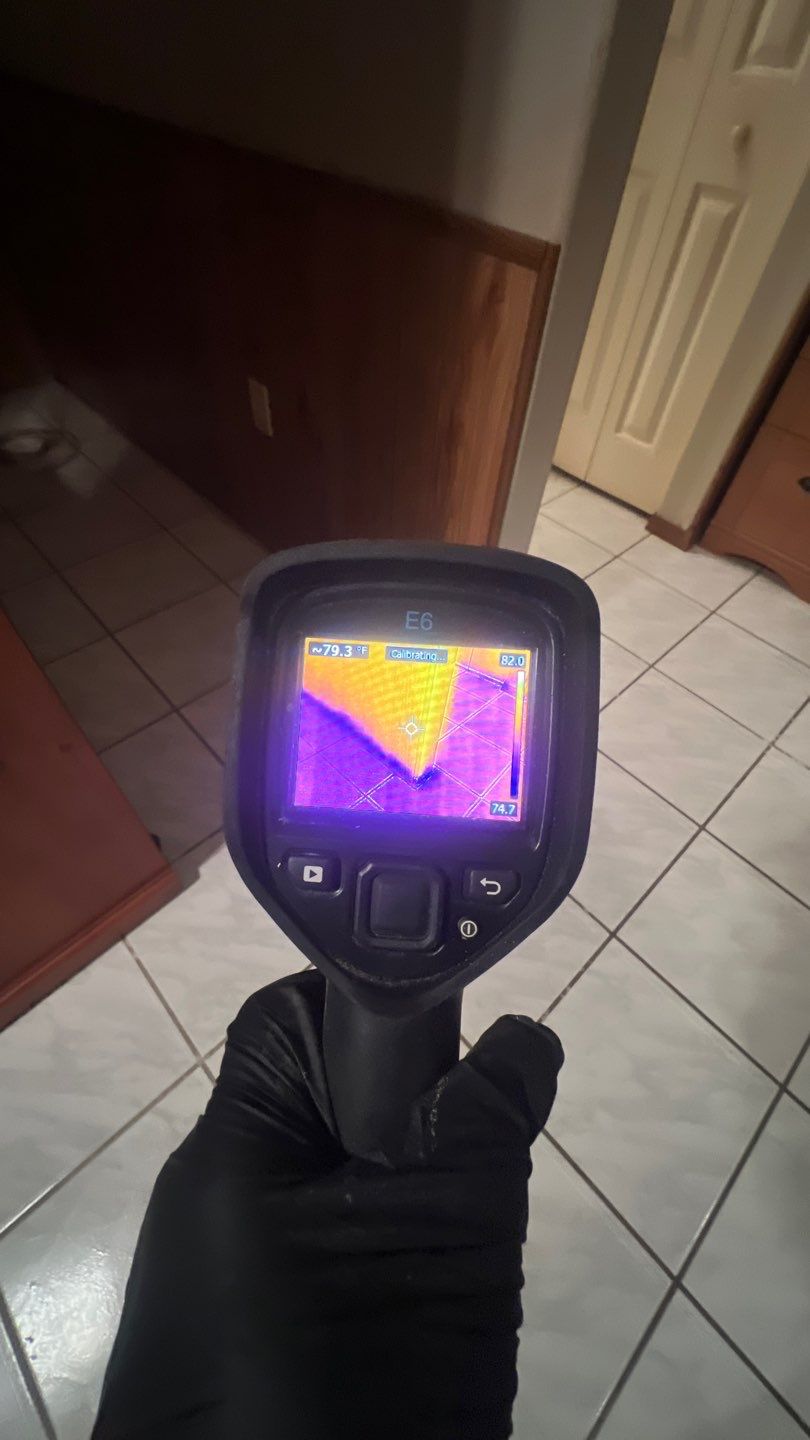
The goal is not simply to make exposed surfaces feel dry. It is to find out which materials became wet, how far the moisture moved and whether those materials are actually drying.
Why a Burst-Pipe Loss May Be Larger Than It Looks
Drywall, insulation, wood-based cabinets and some flooring assemblies can absorb or conceal water. Baseboards may look unchanged even while moisture remains behind them. Water from an upper floor can also follow framing, pipes and penetrations before appearing below the original leak.
That is why the size of the puddle does not always reveal the size of the affected area. The amount of water released, the time it remained in contact with materials and the route it took through the building all influence the cleanup plan.
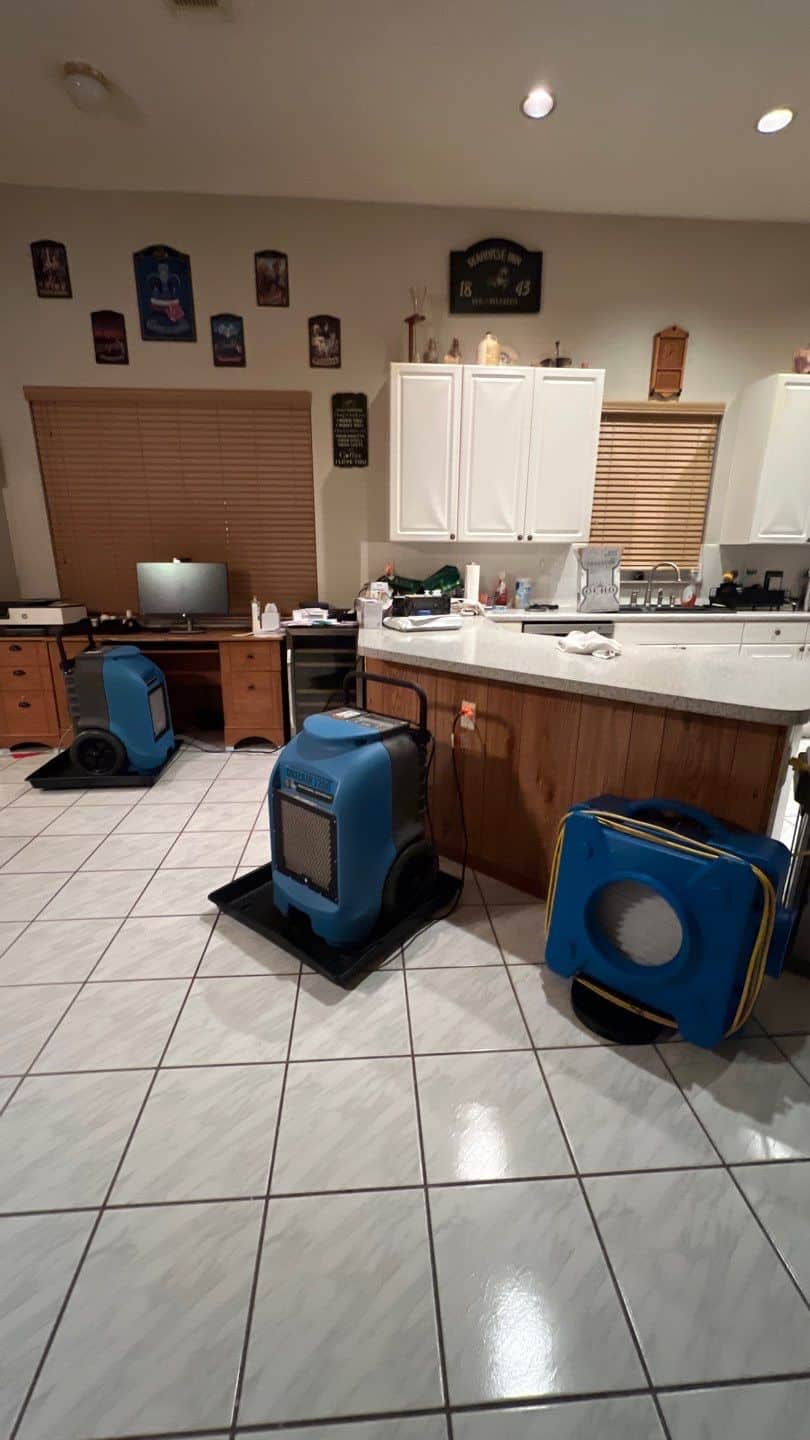
Rescue Clean 911 has completed water-loss projects involving moisture detection, standing-water extraction, commercial dehumidification and air movement, structural drying, moisture monitoring, selective removal of unsalvageable materials and loss documentation. Not every property needs every method. The work should reflect the conditions found during the assessment.
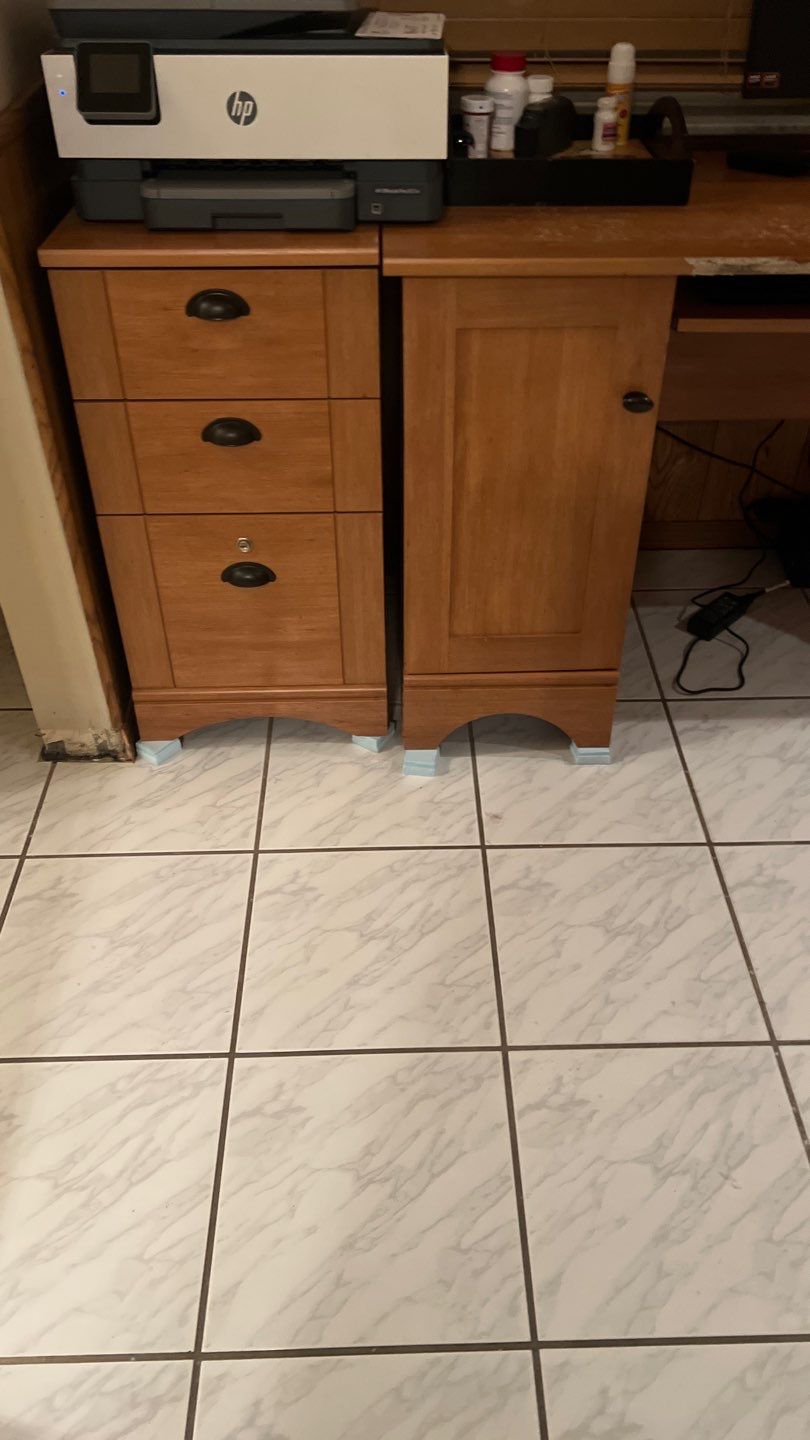
A published Boca Raton water mitigation project shows how quickly a failed supply line can affect more than the area around the fixture. In that case, a ruptured toilet supply line led to standing water and hidden moisture concerns. The work included protecting belongings, extracting water, checking concealed areas, placing commercial drying equipment and monitoring progress. Drying and mitigation for that specific loss were completed over three days.
The important lesson is not that every burst pipe follows the same timeline. It is that drying needs to be measured rather than judged by appearance alone.
What Happens When Water Damage Cleanup Begins
The plumbing repair stops new water from entering the building. Cleanup addresses what is already there. Depending on the loss, that may begin with locating affected materials and extracting standing water before a drying plan is established.
Materials that can be dried may remain in place and be monitored. Materials that are no longer salvageable may need selective removal. Dehumidification and controlled air movement can then support drying, with moisture readings used to track progress rather than relying on touch alone.
This distinction matters after a burst pipe because the room may appear much better once the puddle is gone. If water remains beneath flooring or inside an assembly, however, the loss has not been fully addressed.
Rescue Clean 911's Water Damage Restoration page provides more information about the primary service. The company also has documented experience preparing restoration records for insurance-related losses, without determining whether a particular loss will be covered.
Get Help with the Next Step
After the water supply is shut off and the failed pipe is being repaired, arrange an assessment when water has reached walls, ceilings, cabinets, flooring or more than one room. Prompt attention is also appropriate when standing water is extensive or you cannot tell how far the moisture traveled.
To discuss a water-loss situation with Rescue Clean 911, call (561) 425-6700 or reach the company through the Contact Us page.