Summary
Soft washing and pressure washing serve different purposes. Soft washing uses low pressure and cleaning solutions to safely clean roofs, siding, and delicate surfaces, while pressure washing relies on high-pressure water for hard surfaces like concrete and driveways.
Choosing the wrong method can cause damage—using the right one protects your property and delivers better, longer-lasting results.
When comparing soft wash vs pressure wash, it’s important to understand how each cleaning method works and what surfaces they’re designed for.
A soft washing service uses low-pressure water combined with specialized cleaning solutions to remove dirt, mold, mildew, and algae from delicate surfaces, while pressure washing—also known as power washing—relies on high-pressure water to clean hard surfaces.
In exterior cleaning, these two approaches are often discussed because they serve different purposes. Although both methods are effective, they differ greatly in technique, safety, and application.
Knowing these differences helps you choose the right option for maintaining your home or property. Below, we break down how each method works, its advantages, and when to use them for the best results.
What’s the difference: Soft Wash vs Pressure Wash
While most people use the terms interchangeably, there is a main difference in the cleaning process between a soft wash system and traditional pressure washing.
Traditional pressure washing relies on sheer force. By using a high pressure cleaning method, a pressure washer blasts water to effectively clean hard, stained surfaces.
On the other hand, a soft washer relies on a specialized chemical mixture to do the heavy lifting, using a low pressure washer to rinse contaminants away without force.
| Soft Washing | Pressure Washing |
|---|---|
| Uses low PSI to gently treat surfaces | Relies on intense water force to remove grime |
| Operates with specialized soft washing nozzles designed for low pressure | Uses color-coded pressure washer nozzles that deliver high-pressure spray |
| Requires a blended cleaning solution to break down dirt, mold, and buildup | Typically depends on pressurized water rather than detergents |
| Best for long-lasting results and controlled surface treatment | Best for deeper cleaning on hard, durable materials |
| Safer for siding, roofs, and fragile surfaces | Should be avoided on delicate or easily damaged materials |
What Is Soft Washing?
A soft washing service is a cleaning method that uses low-pressure water combined with specialized cleaning solutions to remove dirt, mold, mildew, and algae from delicate surfaces. Unlike pressure washing, which relies on high-pressure water, soft washing uses a gentle approach to protect surfaces from damage.
 The Soft Wash Process
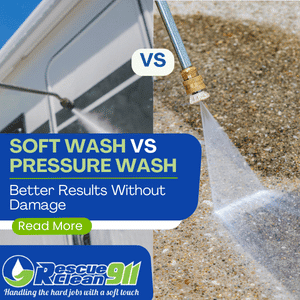
Soft washing involves applying a cleaning solution, typically containing sodium hypochlorite and sodium hydroxide, to the surface. This solution breaks down dirt and organic matter. After allowing the solution to sit for a while, the surface is rinsed with low-pressure water, washing away the contaminants.
Common Uses
Soft washing is ideal for delicate surfaces that might be damaged by high pressure. These include roofs, vinyl siding, wood siding, and other exterior surfaces. For example, roof cleaning is often done using the soft washing method to avoid damaging roof shingles.
Benefits
- Safety for Delicate Surfaces: Soft washing uses less pressure, which is great for delicate surfaces and reduces the risk of damage.
- Effective Cleaning: The combination of cleaning solutions and low-pressure water effectively removes contaminants.
- Environmental Considerations: Soft washing uses less water compared to high-pressure methods, making it a more environmentally friendly option.
READ: Can Mold Grow on Insulation – How To Detect and Get Rid Of It
What Is Pressure Washing?
Pressure washing, also known as power washing, uses high-pressure water to clean hard surfaces. This method is highly effective for removing dirt, grime, mold, and mildew from materials.
The Pressure Wash Process
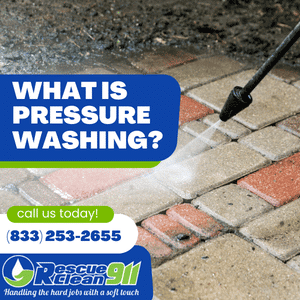
High-pressure washing blast can remove stubborn dirt, loose paint, and even tough stains from hard surfaces like concrete and wooden decks.
 Common Uses
Pressure washing is best suited for hard surfaces that can withstand high pressure. These include concrete driveways, patios, sidewalks, and wooden decks. It is also used for cleaning exterior surfaces and removing loose paint before repainting.
Benefits
- Powerful Cleaning: The high-pressure water can clean surfaces thoroughly, removing even the toughest dirt and stains.
- Versatility: Pressure washing is versatile and can be used on various hard surfaces.
- Quick Results: The high-pressure method provides quick and effective cleaning results.
Understanding Pressure Washer Nozzles
To effectively clean surfaces, a professional must choose the right pressure washer nozzles. These are color-coded to indicate the spray angle and intensity:
- Red (0°): A concentrated stream for the toughest removing stains on concrete.
- Yellow/Green (15°-25°): Standard for most pressure cleaning tasks.
- White (40°): Ideal for rinsing other materials like siding.
- Black (65°): Used as soft washing nozzles to apply cleaning agents at very low pressure.
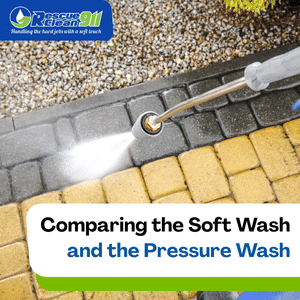
Comparing the Soft Wash and the Pressure Wash
When deciding between soft wash and pressure wash, it’s important to understand their key differences in effectiveness, safety, and environmental impact.
Effectiveness
- Soft Washing: Soft washing is highly effective for removing organic matter like mold, mildew, and algae from delicate surfaces. The cleaning solutions used in soft washing break down these contaminants, ensuring a thorough clean.
- Pressure Washing: Pressure washing excels at removing dirt, grime, and stains from hard surfaces. The high-pressure water can clean surfaces quickly and efficiently.
 Safety and Suitability
- Soft Washing: Soft washing is safer for delicate surfaces like vinyl siding, wood siding, and asphalt shingles. The low-pressure water minimizes the risk of damage, making it ideal for roof cleaning and other sensitive areas.
READ: What Are the Symptoms of Exposure to Black Mold from Water?
- Pressure Washing: Pressure washing is suitable for hard surfaces that can withstand high pressure. It is not recommended for delicate surfaces as the high-pressure water can cause damage.
Environmental Impact
- Soft Washing: Soft washing uses less water compared to pressure washing, making it a more environmentally friendly option. The cleaning solutions used are also designed to be effective with minimal water usage.
- Pressure Washing: Pressure washing requires a significant amount of water to achieve the desired results. This can be a consideration for those looking to minimize water usage.
What About Power Washing?
Power washing works much like pressure washing, but with one key upgrade — heated water. The added heat boosts the cleaning power by helping loosen grease, algae, and organic buildup more quickly than cold water alone.
When combined with high pressure, warm water can break down stubborn residue fast, delivering visibly stronger results. That’s why power washing often produces more dramatic transformations when comparing cleaning results side by side.
Pros and Cons of Soft Washing vs Traditional Pressure Washing
Understanding the main difference between soft washing vs traditional pressure washing helps homeowners choose the safest and most effective cleaning method for their property.
Pros of Soft Washing
Soft washing uses a soft wash system that combines a chemical mixture, specialized soft washing nozzles, and low water pressure to effectively clean surfaces.
- Ideal for fragile surfaces and more fragile surfaces like roofs, siding, stucco, and painted areas
- Uses a low pressure washer, reducing damage and offering less risk to surfaces
- Delivers deeper cleaning by killing organic growth at the root
- Helps preserve protective coatings on roofs and siding
- Effective for treating discolored roof areas, algae, mold, and mildew
- Removes build up, stains, and other debris without erosion
READ: How Much Is Flood Damage Repair Costs West Palm Beach
 Cons of Soft Washing
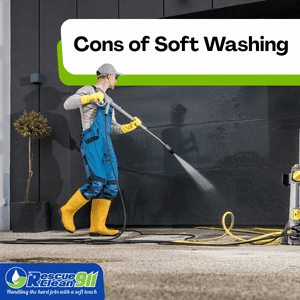
- Requires professional knowledge of cleaning chemicals and cleaning agents
- Incorrect use of harsh chemicals can damage landscaping if not properly controlled
- Not suitable for heavy concrete stains or industrial grime in industrial settings
Pros of Pressure Washing
Pressure washing relies on pressurized water, high PSI, and specialized pressure washer nozzles to remove dirt and grime.
- Excellent for high pressure cleaning on hard surfaces
- Quickly removes heavy stained surfaces like driveways and sidewalks
- Works well for pressure cleaning concrete, brick, and stone
- Can use hot water for grease and oil removal
- Ideal for tough applications requiring removing stains fast
Cons of Pressure Washing
- Can damage fragile surfaces and other materials if used incorrectly
- Risk of stripping paint and protective coatings
- Improper nozzle selection can etch concrete or wood
- Not ideal for roofs or siding due to excessive water pressure
Cost Considerations: Soft Washing vs Pressure Washing
Homeowners often ask whether a pressure washer or soft washer is more cost-effective. Pricing depends on the cleaning process, surface type, and level of build up.
- Soft washing may cost slightly more upfront due to specialized cleaning agents, but it lasts longer because it treats growth at the source
- Pressure washing and soft washing services vary based on surface area and accessibility
- Frequent traditional pressure washing may increase long-term repair costs due to surface wear
In many cases, using both pressure washing and soft washing together provides the best value and results.
READ: The Importance of a Water Damage Restoration Checklist West Palm Beach
 Why You Need Soft Washing and Pressure Washing
Maintaining your exterior is crucial for both aesthetic and functional reasons. Regular cleaning can prevent damage, improve curb appeal, and extend the lifespan of various surfaces.
- Curb Appeal: A clean exterior enhances the appearance of your property, making it more attractive to visitors and potential buyers.
- Preventing Damage: Regular cleaning removes contaminants that can cause damage over time, such as mold and mildew on roofs or dirt and grime on siding.
- Extending Lifespan: Cleaning helps preserve the integrity of surfaces, extending their lifespan and reducing the need for costly repairs.
When to Choose Soft Washing vs. Pressure Washing
The best cleaning method depends on what you’re washing, how delicate the surface is, and the type of buildup present. Below is a quick reference to help you decide when to use a pressure washer, soft washer, or power washer around your property.
| Pressure Washer | Soft Washer | Power Washer |
|---|---|---|
| Sidewalks and walkways | Painted or sealed exterior surfaces | Large driveways |
| Pavers and hardscape features | Materials held together with mortar or sand | Concrete slabs |
| Dense, durable surfaces | Roofs, wood furniture, and other fragile surfaces | Non-porous surfaces with heavy staining |
| Areas requiring strong water force | Areas that need gentle cleaning with solutions | Spaces with grease, oil, or ground-in grime |
DIY vs. Professional Cleaning
It’s also important to consider experience level. Some surfaces — like wood decks or stained concrete — can tolerate pressure cleaning when handled correctly, but improper technique increases the risk of damage.
Using the wrong nozzle, excessive water pressure, or poor angle control can lead to costly repairs. When you’re unsure, hiring a professional ensures the right method is used for each surface safely and effectively.
READ: Causes Of Black Mold In Insulation And How to Prevent It
Trust Rescue Clean 911 for Soft & Pressure Washing
Soft washing and pressure washing each serve a purpose, depending on the surface and level of cleaning needed. From delicate areas like roofs and siding to durable surfaces such as driveways and decks, choosing the right method helps protect your property and maintain its appearance.
Working with a professional ensures safe, effective results. At Rescue Clean 911, we specialize in both soft washing and pressure washing, using proven techniques and professional equipment to deliver outstanding results without surface damage. Contact us today to restore and protect your home’s exterior.
Frequently Asked Questions
Can you use a pressure washer as a soft wash?
A traditional pressure washer can sometimes be adapted for soft washing, but it’s not ideal without the proper setup. True soft washing requires a soft wash system, low pressure, and specialized soft washing nozzles to safely apply a cleaning solution.
Using a standard pressure washer without reducing the PSI or using the right attachments increases the risk of damage, especially on fragile surfaces like roofs and siding.
How long does soft washing last?
Soft washing typically lasts much longer than traditional pressure washing because it targets organic growth at the root. When done correctly, results can last anywhere from 12 to 36 months, depending on climate, shade, and surface type. The combination of low pressure and professional cleaning agents helps prevent rapid regrowth and surface discoloration.
Should I soft wash or pressure wash my roof?
Roofs should almost always be soft washed, not pressure washed. High water pressure can damage shingles, remove protective granules, and shorten the roof’s lifespan.
Soft washing uses a low-pressure application and a specialized chemical mixture to safely remove algae, moss, and stains from a discolored roof without causing harm.
Can power washing and soft washing be used together?
Yes, power washing and soft washing are often used together as part of a complete exterior cleaning process. Soft washing is typically used first on delicate or organic growth–covered surfaces, while power washing or pressure washing is reserved for durable areas like concrete or driveways. Combining both methods ensures all areas are cleaned safely and effectively.
What chemicals do you use for soft washing?
Soft washing uses professional-grade cleaning chemicals designed to break down mold, mildew, algae, and bacteria.
These solutions are carefully diluted and applied to minimize risk while delivering deeper cleaning. When used properly, these cleaning agents are effective without damaging surfaces, landscaping, or protective coatings.
Should you soft or pressure wash your gutters?
Most gutters should be soft washed, especially if they are painted or aluminum. Soft washing removes stains, tiger striping, and organic buildup using low pressure and cleaning solutions.
Pressure washing gutters can lead to dents, paint damage, or water intrusion if done incorrectly, making soft washing the safer option in most cases.