Most professional mold remediation projects take 1–5 days, depending on the size of the infestation, materials affected, moisture sources, and whether HVAC systems or hidden areas are involved. Extensive mold damage or health-related risks may extend the timeline.
The response to a mold problem needs to be swift, thorough, and effective. That’s where mold remediation comes in. You may be wondering: “How long does mold remediation take?”
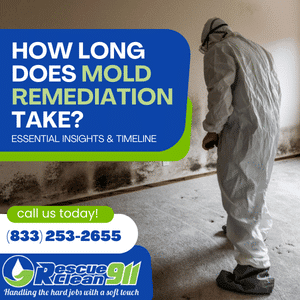 This is a question that we hear quite often, and the answer is critical for homeowners who want to quickly restore the health and safety of their living environment. Depending on several factors, like size, extent, and potential hazards, it generally takes one to five days.
If you’ve noticed a strange odor in your home or office, or if you or your family members are experiencing unexplained health problems — like respiratory issues or allergic reactions — you might be dealing with an unseen, but all too common foe: mold.
Mold growth can be stealthy, creeping in and taking hold under your floors, behind your walls, or above your ceilings, causing problems that extend beyond simple aesthetic damage.
It can generate an infestation that is not just nasty, but potentially damages the structural integrity of your property as well. Mold spores can spread quickly and widely, increasing health risks to those exposed, especially for people with compromised immune systems.
Mold remediation is a specialized process designed not only to remove visible mold but also to fix the conditions leading to its growth. Contrary to popular belief, professional mold remediation goes beyond mold removal.
It encompasses a thorough approach that treats the affected area(s), removes the contamination, addresses the cause, and also implements preventive measures to inhibit future mold growth.
How Long Does Mold Remediation Take? A Professional Timeline
On average, a professional removal process takes between 1 to 5 days. However, this isn’t a “one size fits all” answer. The duration is significantly impacted by the environmental conditions, the moisture intrusion source, and the types of different materials involved.
To provide a cost-effective and permanent solution, we follow a strict protocol. Here is the typical day-by-day breakdown:
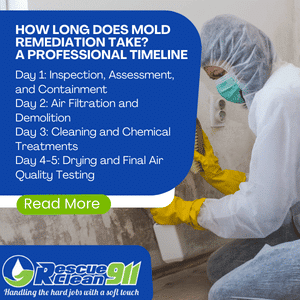 Day 1: Inspection, Assessment, and Containment
The process begins with a professional mold assessment to identify the mold species present and the extent of the existing mold. We identify all moist areas and moisture sources, such as pipe breaks, failing window seals, or condensation in dark cabinets.
Once the scope is defined, we set up containment barriers to isolate the containment areas. This prevents mold spores from spreading to unaffected parts of your home, protecting your indoor air quality.
Day 2: Air Filtration and Demolition
We establish negative air pressure using industrial air scrubbers equipped with HEPA filters. This is critical to prevent mold spores from cross-contaminating the indoor environment.
During this phase, we remove mold-infested materials. This includes porous damaged materials like saturated drywall, ceiling tiles, and carpeting that cannot be salvaged. If you have extensive mold damage, this phase may be extended to ensure all materials affected are safely removed.
Day 3: Cleaning and Chemical Treatments
Once the damaged materials are out, we focus on the structural elements. We remove mold from non-porous surfaces using HEPA vacuuming and specialized chemical treatments (antimicrobials) to kill any remaining spores. We also inspect the HVAC system and HVAC ducts, as these can often harbor spores that threaten your family’s health.
Day 4-5: Drying and Final Air Quality Testing
The most important step to prevent future mold growth is ensuring the structure is bone-dry. We use industrial dehumidifiers to pull excess moisture from the air and wood framing.
It’s also important to understand how moisture control equipment affects mold risk—learn more about whether humidifiers can cause mold.
Finally, we conduct a post-remediation air quality test. We want to ensure that the indoor air quality has returned to a safe, “pre-loss” condition before the containment is taken down.
Factors Affecting the Length of Mold Remediation
When addressing common questions about how long mold remediation takes, it’s important to understand that the duration of the mold remediation process can significantly vary.
Generally, you can expect a standard mold remediation process to last anywhere from one to five days. However, this timeframe can change depending on several factors:
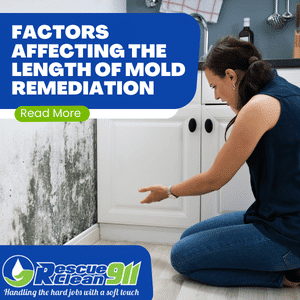 Size and extent of the infestation
The size and depth of the mold infestation directly impact the length of the remediation process. A small area of mold growth, such as that around a leaky pipe or window, can usually be addressed more quickly than growth across an entire basement or crawl space.
Type of surfaces affected
Mold tends to favor porous materials like drywall, upholstery, and wood because they provide the organic material molds need to flourish.
However, these instances also prove more time-consuming and complicated to deal with, sometimes requiring the removal and replacement of the infected materials. On the other hand, non-porous surfaces like tiles or metals can be cleaned in a shorter timeframe.
Health factors and risks involved
The type of mold present can also influence the timeframe of remediation. Certain types, such as Stachybotrys chartarum or ‘black mold,’ can pose serious health risks.
Cleaning such toxic mold demands added caution, elaborate containment setup, and even evacuation of the house occupants, extending the remediation timeline.
Primarily, healthcare facilities and homes with individuals suffering from respiratory problems or immune system disorders require careful handling.
Remember, a superior mold remediation process is not rushed. Having a comprehensive approach enables us to provide you with thorough and safe mold remediation services.
While it’s reasonable to want a quick resolution, effective mold remediation is a thorough process. Allowing a professional mold remediation company the necessary time can result in a longer-lasting solution to your mold issue.
Pro Tip: It’s Not Just About the Mold
Remember, not all mold is visible. The goal of professional remediation isn’t just to “wipe away” the spots; it’s to fix the environmental conditions that allowed the mold to thrive. By addressing the excess moisture and cleaning the HVAC system, we ensure a long-term healthy home.
Mold Remediation Process – Step by Step
Making itself known by a musty odor, persistent dampness, or visible signs of infestation, mold is a problem that needs to be attended to promptly and professionally.
 But what does mold remediation entail, and how does it differ from mere mold removal? Let’s explore the difference between these two often-confused terms.
Mold remediation aims to control the mold situation, effectively bringing the mold levels back to a natural and safe extent. On the other hand, mold removal is about the total elimination of mold, which isn’t necessarily possible because we share an environment.
Professional mold remediation focuses on restoring a healthy environment rather than chasing an unrealistic ‘mold-free’ state.
Step 1: Inspection
The process of mold remediation typically starts with an initial inspection. Mold specialists arrive at your property and carry out an exhaustive mold inspection to assess the severity and extent of visible mold and potential hidden mold growth.
This visual assessment, often supplemented by moisture meters and infrared cameras, identifies the problem area(s) and helps formulate an action plan tailored to your specific needs.
Step 2: Containment
Once the extent of the problem is defined, we will begin the containment phase. The affected area is securely isolated using plastic sheeting and advanced techniques to prevent the spread of mold spores.
Our mold remediation professionals wear protective gear, including gloves, goggles, and respirators, given the potential health risks associated with mold exposure.
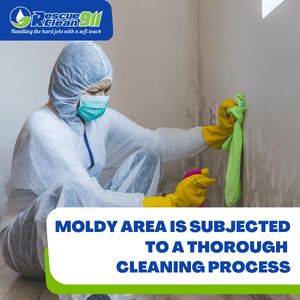 Step 3: Removal
Following containment comes probably the most vital phase – the actual mold removal. The moldy area is subjected to a thorough cleaning process, using advanced equipment and EPA-approved antimicrobial chemicals.
Non-porous materials can often be cleaned and salvaged, but porous materials like drywall and carpeting are usually removed and disposed of. It’s important to note that remediation isn’t a ‘one size fits all’ solution, as the method can vary depending on the type of mold and the extent of contamination.
Some property owners ask whether natural methods can help with mold removal—this article explains whether sunlight can kill mold.
Step 4: Moisture Control and Prevention
Moisture control is a critical step since mold thrives in moist conditions. High humidity levels in your home or office can increase mold growth.
An essential part of mold remediation is identifying and addressing the sources of extra moisture, such as a leaky pipe or inadequate ventilation, ensuring that relative humidity inside is kept under control.
After the source is found, preventive measures are put in place. Comprehensive mold remediation includes strategies to avoid a repeat occurrence, ranging from fixing moisture issues to advising on best practices for maintaining a mold-resistant environment.
Mold remediation extends beyond simple mold removal to a thorough and thoughtful process that aims to fully restore healthy living conditions.
Who Pays For Mold Remediation
Who pays for mold remediation depends entirely on how the mold started. Since insurance usually views mold as a “preventable” maintenance issue, they only pay if it’s tied to a sudden accident.
Here is the breakdown of who is responsible:
1. The Homeowner (Out of Pocket)
You pay if the mold is caused by:
- Neglect: A slow leak you ignored for months or poor ventilation in a bathroom.
- Maintenance: General humidity, condensation, or old windows that let in moisture.
- Flooding: Standard home insurance does not cover mold caused by rising floodwaters (you need separate flood insurance).
2. Insurance Company
They pay (up to your policy limit) only if the mold is a result of a “covered peril,” such as:
- A sudden pipe burst or water heater failure.
- Water damage from firefighters putting out a fire.
- A fallen tree or storm that creates a sudden opening in your roof.
3. Landlord vs. Tenant
- Landlord Pays: If the mold is due to structural issues, like a leaky roof, old plumbing, or a failure to provide proper ventilation.
- Tenant Pays: If the mold is caused by their lifestyle or negligence—such as never using the exhaust fan, not reporting a leak promptly, or overfilling a bathtub.
4. Condo Association (HOA)
- The Association Pays: If the mold originated from a common element (e.g., a shared main pipe in the walls or a leak in the building’s exterior).
- The Owner Pays: If the mold started from an appliance or pipe exclusively serving their unit (e.g., their dishwasher or shower drain).
FAQs on Mold Remediation
Addressing the concerns and queries of our clients is a priority at RescueClean 911. Here are some answers to frequently asked questions about mold remediation:
How do I know if I have mold?
Common signs of mold include a musty odor, visible mold growth on walls or ceilings, discoloration of surfaces, and persistent health issues like respiratory problems or allergic reactions.
Remember, even if you can’t see mold, a musty smell is a good indicator of its presence. A professional mold inspection can help confirm and assess the extent of a mold issue.
Can I do mold remediation myself?
While minor mold problems can be addressed with over-the-counter mold removal products, like Ammonia, larger infestations or toxic mold varieties need the expertise of professional mold remediation specialists.
The process often requires specialized equipment, experience, and protective gear. Attempting to do it yourself may cause spores to spread, worsening the problem and posing health risks.
What is the cost of professional mold remediation?
The cost of mold remediation isn’t ‘one-size-fits-all’. It varies based on square footage, the amount of mold, the type of mold, and if there’s structural damage that needs repair.
In general, mold remediation costs may vary greatly, but your insurance company may cover some or all costs involved, depending on your policy’s terms.
Is it safe to stay in the house during mold remediation?
The answer depends on the extent of mold growth, the area of your house affected, and the kind of mold present. For substantial infestations or when toxic mold, like black mold, is involved, it’s often recommended that residents temporarily vacate the premises for their safety.
How can one prevent mold growth after remediation?
Preventive measures include controlling humidity levels, addressing leaks promptly, and ensuring proper ventilation. Regular inspections can also help detect and address a mold problem before it turns into a severe infestation.
We’re Here When You Need Us
Mold can be a silent intruder, wreaking havoc subtly and persistently. It’s a stressor, a health hazard, and a property destroyer. Prompt and professional action is critical when you encounter a mold problem in your home or office.
 Understanding the issue and dealing with it correctly has significant implications not only for the structural integrity of your property but also for the health of its occupants.
At RescueClean 911, we understand the urgency and meticulousness required for effective mold remediation. Our specialists employ a systematic and targeted approach, balancing thoroughness with efficiency.
We strive to complete the remediation process within the quickest possible time, without compromising on comprehensiveness or quality.
While the timescales may vary, the service quality and commitment you receive from our expert team remain constant. As a leading mold remediation company in South Florida, we are dedicated to restoring your property to a safe, pre-loss condition and committing to preventive measures to minimize the risk of future mold growth.
Remember, the key to effective mold remediation lies not in the speed but in the skill, proficiency, and extensive knowledge that RescueClean 911 brings to the table. Get in touch with us today for thorough, professional mold remediation that you can trust.