
Does Heat Kill Mold?: Understanding the Relationship Between Heat and Mold
Mold infestations can often be difficult to manage in humid environments. So, the question of whether heat can kill mold becomes important for Floridians looking to keep their homes safe and sanitary.
Does Heat Kill Mold? Understanding Mold and Mold Growth
Before taking a look at whether heat kills mold, we need to understand exactly what we’re up against. Mold is a type of microscopic fungi that is commonly known for causing damage to homes and health issues for residents.
There are thousands of different mold species, some of which are destructive, while others are harmless. However, specific detrimental strains, such as black mold, can cause severe health concerns, making it important to guard against their growth.
 The Dangers of Mold
Beyond being a nuisance and an eyesore, mold poses several health hazards. Mold exposure can lead to numerous problems, ranging from an allergic reaction to severe respiratory issues.
Although the severity of these health effects varies from person to person, no exposure is deemed safe, making mold growth a matter not to be taken lightly.
Florida and Mold Growth
Florida, like other humid states, serves as a breeding ground for mold. This is because the environment that mold favors is usually damp and humid, where moisture problems and organic matter are abundant.
Moisture can come from many sources, like leaks in roofs, windows, or pipes, or even from flooding. Organic matter, such as food, wood, and even dust, can easily become infested with mold when combined with moisture and a humid environment.
All these, when combined, create a perfect balance that fosters mold growth and produces indoor airborne allergens, significantly impacting indoor air quality.
As you can see, understanding and controlling mold growth is super important. Not just to maintain the structural integrity of your home but to reduce exposure and potential health issues for residents.
What Temperature Kills Mold?
Understanding the specific temperature thresholds is crucial when considering heat as a solution to kill mold. Research from the USDA shows that mold spores begin to deactivate at temperatures around 140 to 160°F.
However, reaching these temperatures and maintaining them long enough to kill mold spores effectively requires more than just turning up your thermostat.
How Heat Affects Mold at the Cellular Level
When exposed to intense heat, the proteins within mold cells begin to break down. It is the process called denaturation. This is similar to how cooking an egg changes its structure permanently.
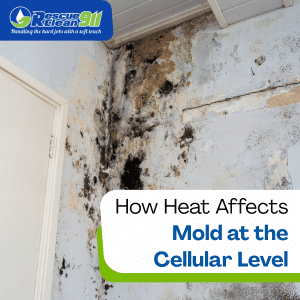 The challenge with using heat to eliminate mold in your Florida home is that the temperature must penetrate deeply into affected materials, not just heat the surface.
For heat to technically kill mold and prevent future mold growth, it needs to:
- Reach temperatures between 140-160°F consistently
- Maintain that temperature for extended periods (often several hours)
- Penetrate all layers of affected materials, including porous materials like drywall and wood
- Address both visible mold growth and the microscopic mold spores that can hide deep within surfaces
The reality is that most home heating systems cannot achieve these conditions safely or effectively enough to kill surface mold, let alone mold that has penetrated into porous materials.
READ: How Long Does Mold Remediation Take? Factors, Processes, and More
The Impact of Heat and Humidity on Mold
Now that we understand what mold is and the conditions in which it thrives, let’s delve into the question: Does heat kill mold? The simple answer is yes.
High temperatures (around 140 to 160° Fahrenheit) can deactivate mold spores and prevent them from spreading. However, the idea that heat can effectively be an at-home DIY mold solution is inaccurate.
 Why Is Heat Not an Effective Mold Management Tactic?
High heat is inefficient at permanently dealing with mold issues. That’s because the target temperature required to deactivate mold spores and prevent their reproduction is usually much higher than average indoor temperatures, and you would require professional-grade mold remediation equipment to effectively eradicate the problem.
In other words, turning up the heat in your home as a mold management tactic is not an effective way to deal with a mold issue.
The Relationship Between Mold & Humidity
The relationship between mold and humidity adds another layer of complexity to the issue. A common misconception is that, because mold loves water, heat would eliminate it, since heat evaporates moisture. However, high humidity levels can facilitate the survival and even growth of some heat-resistant molds even in high temperatures.
READ: Does Ammonia Kill Mold?
Common Areas for Mold Growth to Occur
One of the most common places these issues collide is within the home’s air conditioning system. If your air conditioner or HVAC system is not regularly cleaned and maintained, your home can become an ideal environment for mold growth.
As the HVAC system regulates the temperature in your space, it also maintains the humidity levels. A poorly maintained unit might not effectively reduce the home’s humidity, increasing the chances of mold growth over time. It can also lead to mold covering the evaporator coil, reducing the efficiency of your AC system.
Additionally, appliances like washing machines that operate with both heat and humidity could also create a breeding ground for mold.
Water Damage Leading to Mold Growth
Water damage can further complicate the issue. Lengthy exposure of walls, ceilings, or furnishings to damp conditions makes them susceptible to mold infestation. High heat will not solve such a moisture problem and may even make the situation worse by causing a musty odor from dead mold.
Does Heat Kill Mold on Different Materials?
The effectiveness of heat varies significantly depending on the material affected by mold. Understanding these differences is essential for Florida homeowners dealing with household mold issues.
 Does Heat Kill Mold on Food?
This is one of the most common questions we receive at Rescue Clean 911. While cooking temperatures can technically kill mold on the surface of food, it’s crucial to understand that heating moldy food does NOT make it safe to eat. Here’s why:
Even though heat can kill mold spores on food surfaces, it cannot eliminate the mold toxins (mycotoxins) that have already penetrated the food. These toxins remain present and can cause serious health issues, especially for individuals with mold allergies or compromised immune systems.
Our recommendation:
- Discard soft foods (bread, soft cheeses, fruits) if you see any visible mold
- Hard foods (hard cheeses, firm vegetables) may be salvageable by cutting at least 1 inch around and below the mold spot
- Never attempt to heat moldy food to “kill the mold”—the remaining spores and mold toxins make this unsafe
Does Boiling Water Kill Mold?
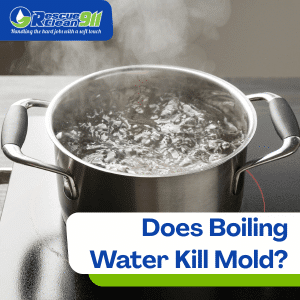 Boiling water can kill surface mold on non-porous, heat-resistant surfaces like metal, glass, or ceramic. The 212°F temperature of boiling water is sufficient to deactivate many mold species on contact. However, this method has significant limitations:
- It only works on surfaces that can withstand boiling water without damage
- It cannot reach mold that has grown into porous materials like wood or fabric
- The moisture from boiling water can actually create conditions for future mold growth if not dried completely
- It does nothing to capture airborne mold spores released during the cleaning process
While boiling water can kill mold on certain surfaces temporarily, it’s not a comprehensive solution for mold removal in Florida homes where humidity creates persistent challenges.
Heat and Porous vs. Non-Porous Materials
The distinction between porous and non-porous materials is critical when discussing whether heat can eliminate mold:
Non-porous surfaces (tile, glass, metal):
- Heat can more effectively kill surface mold
- Easier to clean and disinfect
- Less likely to harbor deep mold growth
Porous materials (drywall, wood, insulation, fabric):
- Mold roots penetrate deep into the material
- Heat struggles to reach embedded mold spores
- Often require complete replacement rather than cleaning
- Can trap tiny mold spores that resist surface heat treatment
In Florida’s humid climate, porous materials are particularly vulnerable. Once household mold penetrates materials like drywall or wooden framing, even intense heat won’t fully eliminate mold without professional intervention.
Does Heat Prevent Mold From Coming Back?
A critical misconception is that once you kill mold with heat, the problem is solved permanently. Unfortunately, this isn’t the case—especially in Florida’s humid environment.
Common household cleaning agents like vinegar can inhibit mild surface mold, but they are not sufficient for deeper infestations within porous materials.
 To effectively eliminate mold and prevent recurrence, treatment must go beyond heat alone and include physical removal of contaminated material, proper disinfection, and long-term moisture control.
Why Heat Alone Doesn’t Prevent Future Mold Growth
Heat can technically kill mold spores that are currently present, but it does nothing to address the underlying conditions that allowed visible mold growth in the first place. Here’s what heat treatment cannot fix:
- Moisture problems remain: Heat doesn’t repair leaking pipes, roof damage, or poor ventilation
- Dead mold spores persist: Even after heat kills mold, the dead mold spores and mold toxins remain on surfaces, potentially triggering mold allergies
- Environmental conditions: Florida’s humidity returns immediately after heat treatment ends
- Airborne contamination: Heat doesn’t capture airborne mold spores that have spread throughout your home
If you’re concerned about how mold affects your health, our guide on What Are the Symptoms of Exposure to Black Mold from Water? explains the most common warning signs homeowners should watch for.
The Reality of Mold Recurrence
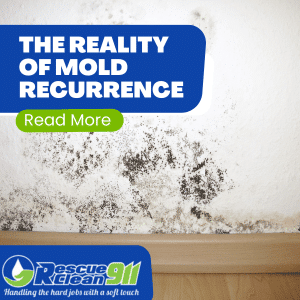 Within 24-48 hours of heat treatment, if moisture and humidity issues aren’t resolved, you’ll likely see visible mold returning to the same areas. This is because:
- Tiny mold spores are everywhere in the environment, constantly settling on surfaces
- Any remaining spores that survived heat exposure can regenerate
- The organic materials in your home (wood, paper, food residue) continue to provide nutrition for mold
- Florida’s climate provides the perfect breeding ground year-round
The solution requires more than heat: Effective mold prevention combines moisture control, proper ventilation, humidity management, and professional mold removal services that address both visible mold and hidden contamination.
Common Home Heat Methods (And Why They Fall Short)
Many Florida homeowners attempt DIY heat-based approaches to eliminate mold before calling professionals. While we understand the desire to save money, it’s important to understand why these methods often fail to kill mold spores effectively.
Hot Water Washing
The Method: Using your washing machine’s hottest setting (typically 130-140°F) with detergent
 Why it seems promising:
- Can kill surface mold on washable fabrics
- Removes visible mold growth from clothing and linens
- Relatively easy and inexpensive
Why it falls short:
- May not reach high enough temperatures to kill all mold spores
- Doesn’t address mold toxins that have penetrated fabric fibers
- Cannot treat mold in other areas of your home
- Clothes with heavy mold contamination may need disposal rather than washing
Heat Guns and High-Temperature Tools
The Method: Using industrial heat guns or steamers that produce intense heat
Why it seems promising:
- Can reach temperatures well above 200°F
- Provides directed heat to specific areas
Why it falls short:
- Fire hazard: Extreme temperatures near flammable materials create serious safety risks
- Uneven heat distribution leaves the remaining spores alive
- Can damage surfaces, especially porous materials
- Doesn’t capture airborne mold spores released during treatment
- May spread contamination rather than eliminate mold
Clothes Dryers
The Method: Running moldy fabrics through a hot dryer cycle
 Why it seems promising:
- Convenient and accessible
- Combines heat with air circulation
Why it falls short:
- Dryer temperatures (around 135°F) may not be hot enough to kill all mold spores
- Can spread tiny mold spores throughout your dryer and future loads
- Doesn’t remove dead mold spores or mold toxins from fabric
- Items with visible mold growth should never be placed in dryers
Sunlight Exposure
The Method: Placing moldy items in direct Florida sunlight
Why it seems promising:
- Free and natural
- UV radiation has antimicrobial properties
- Heat from the sun can help dry materials
Why it falls short:
- Inconsistent temperatures rarely reach mold-killing thresholds
- Only treats surface mold, not deep contamination
- Time-consuming (requires many hours of direct exposure)
- Florida’s humidity can prevent complete drying
- Doesn’t prevent future mold growth once items return indoors
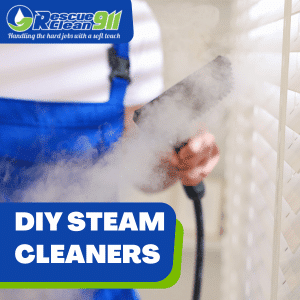
DIY Steam Cleaners
The Method: Using consumer-grade steam cleaners on affected surfaces
 Why it seems promising:
- Steam reaches 212°F, hot enough to kill surface mold
- Penetrates some surface pores
- No harsh chemicals required
Why it falls short:
- Adds moisture to the problem, potentially worsening conditions
- Cannot capture airborne mold spores released during treatment
- Ineffective on porous materials where mold has deep roots
- Consumer models lack the power of professional equipment
- Doesn’t address underlying moisture issues
The bottom line: While these methods might kill some surface mold temporarily, they cannot eliminate mold throughout your Florida home effectively or prevent recurrence without addressing moisture, ventilation, and humidity control.
Alternative Treatment Methods
While heat treatment might seem an intuitive solution in the battle against mold, it’s unfortunately not as effective as it seems. Localized heating might kill some mold spores, but it doesn’t guarantee a complete eradication of the infestation without the use of professional equipment.
Additionally, considering Florida’s high humidity, mold is likely to resurface even after heat treatments, leading to a recurring mold problem.
 Professional Mold Remediation Services
Given the limitations of heat treatment, turning to a professional mold remediation service is advised. A comprehensive mold remediation process addresses the root cause, like the moisture problem, and ensures thorough cleaning of the affected area, making sure not even microscopic fungi have a chance to grow.
Rescue Clean 911 excels in providing such services. Our team of certified experts can tackle any mold issue, offering tailored solutions for each customer. Providing services like air duct repair, air duct cleaning, and mold remediation, we provide an all-encompassing solution for your home.
Not only do we remove the mold, but we also repair the damage caused and provide preventative cleaning, ensuring that the mold doesn’t come back.
Many homeowners are surprised when mold is uncovered during an inspection. Our article What Happens If Mold Is Found During Home Inspection? explains how it can impact the buying, selling, and remediation process.
FAQ – Your Heat and Mold Questions Answered
Can heat kill mold safely?
Using heat to kill mold is not recommended. Household tools cannot provide consistent heat distribution, meaning some spores can survive intense heat while others die. High temperatures may also release toxic fumes from building materials and increase fire risk.
What happens when you notice mold?
When you notice mold, it’s important to understand that existing mold is only part of the problem. Heating surfaces may kill live mold, but spores and toxins remain, preventing a truly mold free environment.
Does extreme heat solve mold problems?
Extreme heat can damage surfaces without fully eliminating contamination. Some species, including black mold, can withstand high heat, especially inside porous materials like wood or drywall.
Can heat remove mold from the air?
No. Heat does nothing to remove airborne spores, and applying heat can actually release more into the air. An air purifier with HEPA filtration is required to remove them physically.
Are home remedies effective?
Methods like baking soda may help with very small surface issues, but they are not sufficient for full remediation or long-term prevention.
Is killing mold enough?
Even dead spores can cause health risks, including allergies and respiratory irritation. A space is not truly mold free unless contamination is physically removed—not just heated.
Preventing Mold Growth in the Future
Eradicating mold is only half the battle; the other half is mold prevention. Maintaining a balanced home’s humidity level plays a crucial part in this fight. Keeping indoor humidity below 60% (preferably between 30% and 50%) can keep mold from growing.
Ventilation & Regular Cleaning
Bringing humidity down may involve using an air conditioner or dehumidifier, improving home ventilation, or using household products that absorb moisture. Keeping these appliances properly maintained is essential – from the AC unit to the washing machine, regular cleaning can prevent mold growth even in high-heat environments.
READ: Do Humidifiers Cause Mold?
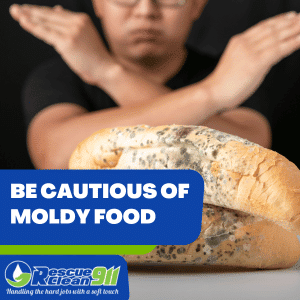 Be Cautious of Moldy Food
When it comes to food safety, it’s necessary to be vigilant, too. Every homeowner ought to ensure their dairy products and other perishable items are stored properly to avoid turning food into a moldy mess.
Key Signs of a Mold Issue
Having a keen eye for early signs of mold helps in quick detection and removal. Noticing a musty smell, spotting any odd patches on surfaces, or experiencing heightened allergies can be possible signs of mold issues. Don’t hesitate to call certified experts, like us at Rescue Clean 911, to take a look.
How Rescue Clean 911 Can Help
With our dedicated team of certified professionals, formidable expertise, and strategic mold processes, we offer solutions that reinstate the safety of your home. It’s not just about removing mold but also about creating a safe, breathable environment for you and your loved ones.
With proper prevention and timely intervention, mold issues can be managed effectively. Know that we are always here to help, one phone call away, ready to intervene against mold.
Don’t let mold compromise your health and the integrity of your home — call the experts at Rescue Clean 911 today!